Will AI take jobs, or just change them? The honest answer is both. Over the next five years, some roles will shrink, many tasks will shift, and new kinds of work will grow.
That balance matters. The ai impact on jobs is not a simple story about machines replacing people. Recent forecasts point to real disruption, especially in routine office work and some front-line roles. Still, major outlooks also suggest net job growth by 2030, not total collapse.
So the better question is this: which jobs will feel pressure first, where will new openings appear, and how can workers get ready without panic? That’s where this article focuses.
Why AI will change work faster than many people expect
The next five years matter because AI has moved past narrow automation. It can now write drafts, summarize meetings, answer customer questions, help with code, sort research, and support planning. That puts it inside daily work, not just factory lines or back-office systems.
Recent forecasts show how large the shift could be. The World Economic Forum expects 92 million jobs displaced by 2030, but 170 million created, for a net gain. McKinsey says about 14 percent of workers may need to switch careers by 2030. Goldman Sachs has also warned that hundreds of millions of jobs are exposed to AI in some way, even if most are not fully replaced.
This quick snapshot helps frame the scale of change:
| Forecast source | Main projection | What it means |
|---|---|---|
| World Economic Forum | 92 million displaced, 170 million created by 2030 | Big disruption, but likely net job growth |
| McKinsey | 14% of workers may need career changes by 2030 | Many people may need to move into new roles |
| Goldman Sachs | 300 million jobs exposed globally over time | Exposure often means task changes, not full replacement |
The main takeaway is simple. AI will change work task by task, then role by role.
Most jobs will be reshaped by tasks, not erased overnight
A job is really a bundle of tasks. That’s easy to forget. A marketing coordinator writes emails, pulls reports, joins meetings, edits slides, and talks with clients. AI may handle the first draft and the summary, but not the whole role.
That pattern will show up in many fields. People still bring judgment, trust, context, and accountability. A manager has to decide what matters. A nurse has to read the room. A sales rep has to build confidence. Software can help, but it still struggles when stakes are high or when people want a human answer.
So yes, some jobs will fade. Still, most jobs won’t vanish in one clean sweep. They’ll be re-cut, like a house under renovation while people are still living in it.
The biggest changes will likely hit knowledge work and routine office work first
AI is already good at repeatable office tasks. It can draft emails, summarize documents, organize notes, schedule meetings, extract data, and create basic reports. That puts pressure on clerical work, admin support, and some entry-level white-collar roles.
It also affects jobs that depend on first drafts. Basic content writing, junior research work, customer support, and simple coding help all face early pressure. In many offices, the question is no longer whether AI can help. It’s how many hours it can remove from routine work each week.

That doesn’t mean every office worker is in danger. It means smaller teams may do the same output, and job descriptions may change faster than hiring systems can keep up.
Which jobs are most likely to be affected by AI by 2031
Some jobs have higher exposure because the work is routine, rules-based, and high volume. In other words, if a task follows a pattern, AI and automation can often help do it faster.
Higher exposure does not always mean full replacement. Often, it means fewer openings, leaner teams, or changed duties. That distinction matters because headlines often make the shift sound more sudden than it is.
Office support, retail, and manufacturing face the clearest automation pressure
Clerical and admin work sit near the front of the line. Calendar management, form handling, record updates, invoice sorting, and basic customer replies all follow steps. That makes them easier to automate or partly automate.
Retail also faces heavy pressure. Forecasts have suggested that a large share of retail work could be automated as self-checkout, smart inventory systems, and robotic stocking improve. Manufacturing has already seen losses tied to automation, and that trend is likely to continue in repetitive production settings.
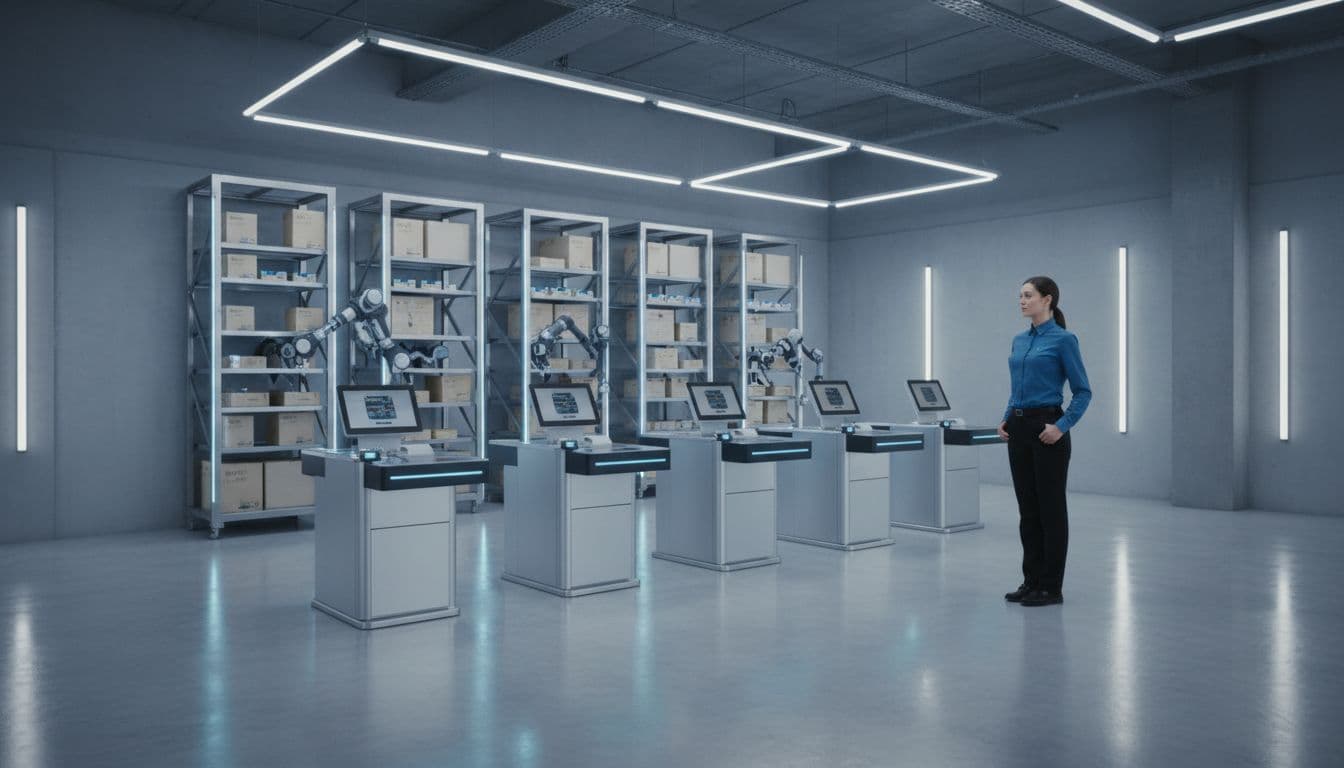
These roles are vulnerable for a simple reason. The workflows are predictable, the decisions are narrow, and the work happens at scale.
Entry-level white-collar jobs may get harder to break into
This may be one of the biggest short-term changes. AI can now handle parts of junior analyst work, entry-level marketing tasks, paralegal support, coding help, and research assistance. It can produce summaries, pull trends, draft copy, and clean up raw information in seconds.
That doesn’t remove the need for young workers. However, it can reduce the number of beginner tasks that once helped people get in the door. If a company needs fewer junior staff to do the same basic work, entry points may narrow.
Exposure does not always mean replacement. Often, it means the ladder into a field gets steeper.
As a result, early-career workers may need stronger portfolios, better communication skills, and proof that they can use AI well, not just compete with it.
Some groups may feel the shift sooner than others
The effects won’t land evenly. Women may face more short-term risk because many admin-heavy roles are female-dominated. Men may feel more pressure later in transport, warehousing, and other manual jobs as robotics improve.
That does not mean one group wins and another loses. It means the timeline may differ by sector. Age, income, education, and local job markets will also shape who feels the change first.
Where new jobs and better opportunities are expected to grow
The good news is that AI does not only cut work. It also creates demand. New tools need builders, testers, trainers, managers, and people who can connect technology to real business needs.
So when people talk about future jobs AI will shape, the answer is broader than pure tech roles. Many growing jobs will sit around AI, not just inside it.
AI, data, and cybersecurity roles should keep growing
The clearest growth areas include machine learning, AI operations, data analysis, model testing, AI governance, and cybersecurity. As more firms adopt AI, they’ll need people to set rules, monitor outputs, fix weak spots, and protect data.
Not every one of these jobs requires a PhD or deep coding skill. Some will focus on workflow design, training, implementation, audit work, and technical support. That matters for career changers because the door is wider than it first appears.

As AI spreads, companies will also need people who can spot errors, test risk, and explain results to non-technical teams. That bridge role may grow fast.
Healthcare, education, and green jobs are likely to stay strong
Human-centered sectors should hold up better because they depend on empathy, hands-on work, and real-world judgment. Healthcare is a strong example. AI can help with notes, scheduling, and pattern spotting, but patients still need care, trust, and human contact.
Teaching follows a similar pattern. Software can support lesson planning and tutoring, yet classrooms still need teachers who can manage people, motivate students, and make judgment calls in the moment.
Green jobs should also grow, especially work tied to power systems, building upgrades, transport changes, and skilled trades. Those roles rely on physical work, problem-solving, and adapting to real conditions, which AI alone can’t handle.
The skills that will matter most in an AI-driven job market
Forecasts suggest that 39 percent of core skills may change by 2030. That sounds huge because it is. Still, the right response is not panic. It’s focused learning.
Tech literacy will matter, even for people in non-tech jobs
Most workers do not need to become engineers. They do need to understand how AI tools work, where they fail, and how to check the output. In practice, that means learning how to prompt clearly, review results, protect private data, and use software to save time.
Basic AI fluency may soon feel like email or spreadsheets. It won’t make someone special on its own. However, lacking it may become a real disadvantage.
Human skills will become more valuable, not less
As software takes over repeatable tasks, human strengths stand out more. Communication, problem-solving, creativity, leadership, judgment, and emotional intelligence all matter because they help people handle messy situations.
Think of AI as a very fast intern. It can be useful, but it still needs direction, checking, and context. People who can lead, explain, persuade, and decide will remain hard to replace.
How workers and employers can prepare for the next 5 years
The biggest risk is not AI by itself. The bigger risk is waiting too long to adapt.
What workers can do now to stay employable
Start small and stay steady. Learn one AI tool that fits your field. If you work in sales, use it for notes and outreach drafts. If you work in finance, use it for summaries and spreadsheet help. If you’re a student, use it to practice research and editing, then check everything.
Also, build proof of value. A simple portfolio, good writing, and clear communication can separate you from a crowded field. Watch your daily tasks closely too. If one part of your job keeps getting automated, move toward the parts that need trust, decision-making, and client contact.
What smart companies should do to avoid a painful transition
Employers should retrain people before cutting them loose. They should also redesign jobs around human plus AI teamwork, not just short-term cost savings. A business that uses AI only to trim headcount may miss the bigger upside, better quality, faster service, and new products.
Clear communication matters as well. Workers handle change better when leaders explain what is changing, why it matters, and what support they’ll get.
The next few years won’t be calm, but they don’t have to be chaotic. The ai impact on jobs will bring real pressure, yet it will also open new paths. Some roles will shrink, many will change, and new ones will appear. People who build useful skills early, especially AI fluency and strong human judgment, will have the best shot at thriving by 2031.


