Writing used to be the slow part of content marketing. In 2026, it often isn’t. Bloggers, marketers, founders, and freelance writers now use AI to speed up research, build outlines, draft faster, and polish copy without staring at a blank page for an hour.
Still, the real challenge isn’t finding an AI tool. It’s picking the right one. Some tools are built for SEO articles. Others are better for ad copy, rewrites, or brand voice control. A few work best as part of a stack, while others try to handle most of the workflow in one place.
This guide covers the best AI tools for content writing with a practical lens. You’ll see what matters now, how SEO and AI search have changed the rules, and which tools fit your goals, budget, and daily process.
What makes an AI writing tool worth using today?
A good AI writing tool should save time without creating more cleanup work later. That means the output has to be clear, usable, and close to your voice. If every draft sounds flat, generic, or wrong, the tool isn’t helping much.
The best options now do more than generate paragraphs. They support research, help shape structure, suggest rewrites, and make it easier to keep tone steady across posts. For teams, collaboration and approval features also matter. For solo creators, price and ease of use matter more.
Human review still matters, though. AI can miss context, state weak claims with confidence, or repeat common phrasing. A human editor adds judgment, trust, and originality, which are exactly what search engines and readers reward.
The features that save the most time for writers and marketers
The biggest time-savers are usually the least flashy. Research help can cut hours from the start of a project. Outline builders turn loose ideas into a working structure. Long-form drafting gives you momentum when the page feels empty.
After that, rewriting tools do a lot of heavy lifting. They tighten weak sentences, shift tone, simplify dense copy, and help adapt one piece for email, social, or landing pages. Grammar cleanup matters too, especially when you’re moving fast.
Integrations also make a difference. If a tool connects with WordPress, docs, or automation apps, you spend less time copying content between platforms. That doesn’t sound exciting, but it keeps the workflow moving.
The best AI writing tool isn’t the one with the most features, it’s the one that removes the most friction.
Why SEO and AI search optimization matter more in 2026
Search has changed. A blog post now needs to work in classic search results and in AI-driven answers, such as AI Overviews and answer engines. That means content has to be clear, well-structured, fact-checked, and broad enough to answer the full topic.

Some AI tools now help with real-time SEO scoring, topic coverage, and page-level optimization. Others go a step further and focus on AI-search visibility, sometimes called AEO or GEO. In plain terms, they help you write content that machines can parse quickly and people can still enjoy reading.
That matters because shallow content drops off fast. Strong tools support keyword use, related subtopics, readability, and content gaps. Still, no score replaces real expertise. Good SEO writing in 2026 is helpful first, optimized second.
The best AI tools for content writing, and who each one is best for
Here’s a quick side-by-side view of the leading options in 2026.
| Tool | Best for | Starting price | Standout strength | Main limit |
|---|---|---|---|---|
| ChatGPT | Research, drafting, versatile writing | Free, Plus $20/mo | Strong all-around writing and idea development | Limited built-in brand controls |
| Jasper | Marketing teams and brand voice | $69/mo per seat | Brand voice training and team workflows | No free plan, takes setup |
| Surfer AI | SEO articles | $69 to $99/mo | On-page SEO scoring and optimization | Less flexible for general writing |
| Writesonic | SEO plus AI-search visibility | $39/mo | Strong SEO and GEO support | Less depth for highly creative work |
| Rytr | Budget-friendly quick writing | $9/mo | Low cost and easy to use | Weaker for deep long-form work |
| Copy.ai | Sales and marketing copy | $29 to $49/mo | Fast copy for campaigns and outreach | Narrower than general writing tools |
| eesel AI | Publish-ready SEO blogs at scale | $99/mo for 100 blogs | Full blog workflow speed | Expensive if you only publish a little |
| Anyword | Performance-focused copy | Pricing not confirmed in current review data | Predictive copy guidance | Less useful for broad content work |
| Sudowrite | Fiction and story writing | $19/mo | Creative writing support | Weak for SEO and marketing |
| QuillBot | Editing and rewriting | About $12/mo | Paraphrasing and cleanup | Not a full writing platform |
The pattern is clear. Some tools are broad assistants, while others are specialists. Picking well matters more than picking the biggest name.
Best picks for blog posts, SEO articles, and long-form content
For long-form work, ChatGPT remains the most flexible starting point. It’s strong for topic research, angle generation, outlines, and first drafts. Deep research features and custom setups help, but you’ll still need your own editing process.
Jasper fits teams that need consistent brand voice across many pieces. Its Jasper IQ and content pipeline features make it useful when several writers work under one style guide. For a solo blogger, it may feel expensive. For a busy marketing team, it can save real time.
Surfer AI is the SEO-first pick. If your goal is ranking articles, not just writing faster, it’s one of the clearest choices. It helps shape content around search intent, keyword coverage, and readability. That focus is its strength, and also its limit.
Writesonic sits in a smart middle ground. It combines writing help with SEO and AI-search visibility features, which makes it attractive for marketers who care about both Google rankings and answer-engine exposure. WordPress and automation support also help.
eesel AI is more specialized. It’s built for fast, publish-ready SEO blog production. If your workflow depends on volume, it can be appealing. If you want deeper control over voice and nuance, you’ll probably want extra editing before publishing.

In practice, many writers mix tools. For example, they may use ChatGPT for research, Surfer AI for optimization, and QuillBot for cleanup.
Best picks for budget users, quick copy, editing, and creative writing
If price matters most, Rytr is hard to ignore. It covers many everyday writing tasks, offers tone choices, and starts cheap. It’s a good fit for freelancers, side projects, and small businesses that need help with captions, emails, and short posts.
Copy.ai works best when speed matters more than depth. It’s useful for ad copy, sales emails, product messaging, and campaign ideas. If your main job is persuasion in short bursts, it’s a strong fit. If you mostly write long blog posts, other tools offer more range.
Anyword is built around performance-focused copy. It’s better for marketers who care about message testing and conversion angles than for writers building deep editorial content. That niche can be powerful, but only if it matches your work.
For fiction, Sudowrite stands out. It helps with scene ideas, story direction, and creative expansion. It’s not built for SEO, and it doesn’t try to be. That’s a good thing if your goal is storytelling.
Then there’s QuillBot, which is less of a writer and more of an editor. It shines when you already have a draft and want to rephrase, tighten, or smooth the language. Many people don’t need another full AI platform. They just need a better second pass, and QuillBot fits that role well.
How to match the right AI writing tool to your content goals
Tool choice gets easier when you stop asking, “What’s best?” and start asking, “What do I create every week?” A student, a fiction writer, and an agency content lead don’t need the same system.
Writers usually get the best results by matching the tool to the job, then building a light process around it.
Best choices for solo creators, small businesses, and lean budgets
For solo creators, ChatGPT gives the most flexibility for the money, especially on the free plan or Plus tier. It handles research, ideation, and drafting well. Pair it with QuillBot if your main pain point is rewriting or cleanup.
If you want a lower-cost all-around helper, Rytr makes sense. It won’t replace a full content stack, but it covers a lot for a small monthly cost. For quick sales copy or campaign blurbs, Copy.ai can also be a good fit.
Small businesses that want one tool to support SEO content may prefer Writesonic. It covers more ground in one place, which helps when time is short and budgets are tight.
Best choices for teams that need brand voice, scale, and workflow control
Teams usually care less about raw generation and more about consistency. That’s where Jasper earns its place. Brand voice training, repeatable workflows, and shared use across teams make it useful for agencies and in-house marketing groups.
eesel AI can also help teams that need a steady stream of SEO blog content. It works best when volume matters and the editing process is already defined. Surfer AI fits teams that live and die by organic traffic, because it keeps SEO feedback close to the writing stage.
The tradeoff is cost and setup time. Team tools often work best after you build prompts, voice rules, review steps, and clear owners for each stage.
Smart ways to use AI writing tools without hurting quality
AI can speed up content, but speed alone doesn’t build trust. Readers notice when posts feel generic, padded, or oddly confident about shaky facts. That’s why the process around the tool matters as much as the tool itself.
A simple workflow for faster drafts that still sound human
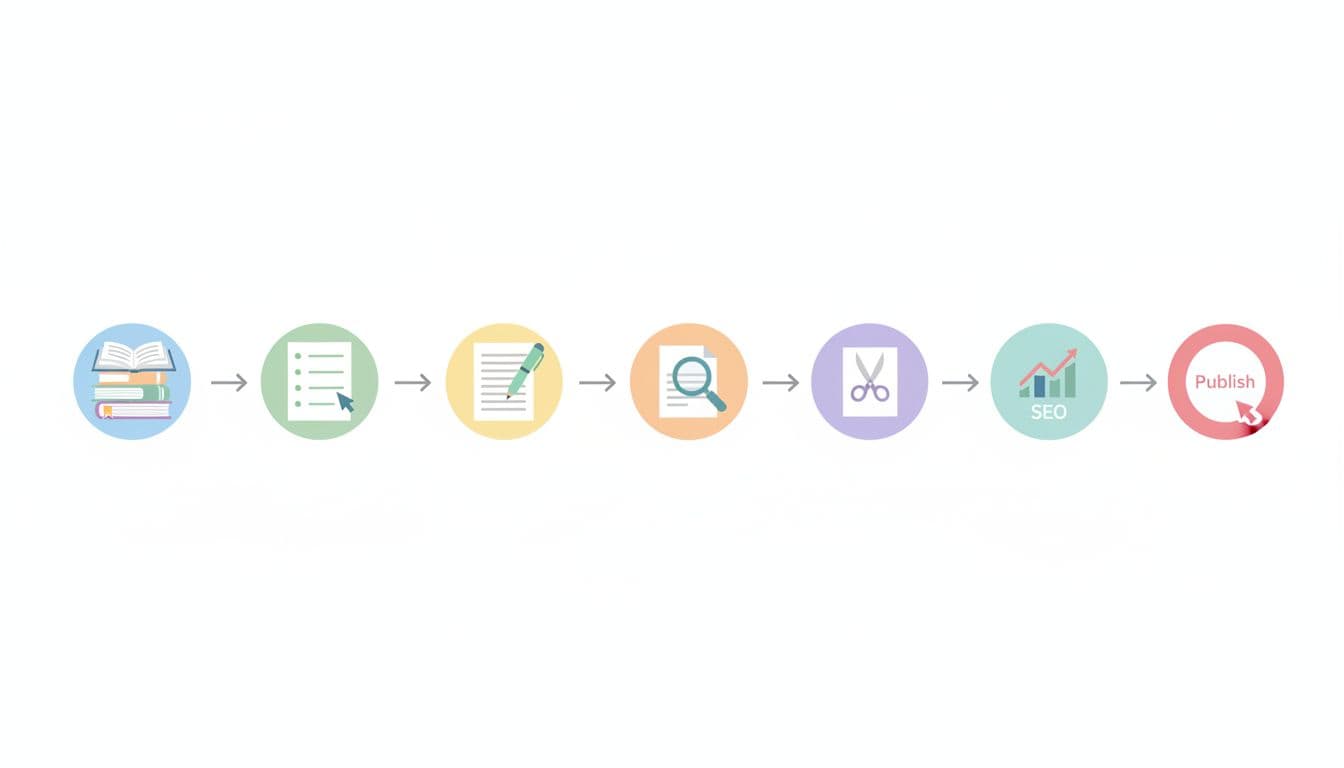
A beginner-friendly workflow can stay very simple:
- Research the topic and collect trustworthy sources.
- Build an outline with the main questions readers want answered.
- Draft with AI to get structure and momentum.
- Fact-check every claim that matters.
- Edit for brand voice so it sounds like a real person wrote it.
- Run an SEO pass for topic coverage, headings, and clarity.
- Proofread before publishing for flow, tone, and errors.
This process keeps AI in the helper role. That’s where it works best.
Common mistakes to avoid when using AI for content writing
The biggest mistake is publishing the first draft. AI often defaults to safe, average language. That creates content that sounds polished at first, then forgettable a minute later.
Factual errors are another problem. Some tools sound certain even when the information is weak or outdated. Over-optimization hurts too. Stuffing keywords into stiff copy may satisfy a score, but it won’t keep readers engaged.
Copied phrasing, weak examples, and vague advice also drag quality down. AI should support your expertise, not replace it. The strongest content still comes from human judgment, clear examples, and a point of view readers can trust.
The right AI writing tool depends on the job
There isn’t one best tool for everyone. ChatGPT is the most flexible, Jasper is strong for teams and brand control, Surfer AI leads for SEO-first workflows, and tools like Rytr, Copy.ai, Sudowrite, and QuillBot each shine in narrower roles.
The smart move is simple: start with your main content goal, then test one or two tools that match it. When the fit is right, AI doesn’t replace your writing. It helps you do your best work faster.


